Polyglot · course
Learn Old Norse
Learn to read the language of the Vikings, the Eddas, and the sagas
The course teaches Old Norse in the standardized “normalized” spelling of the grammars and student editions (Gordon, Barnes, Faulkes): Old Icelandic of about 1200, with ǫ, ø, œ and accents that mark long vowels. It is the language of the Poetic Edda, Snorri's Edda, and the sagas. Runestones are carved in the regional Norse of Viking-age Scandinavia and spelled in runes, and the course reads one in Unit 6.
About 5–10 minutes per lesson
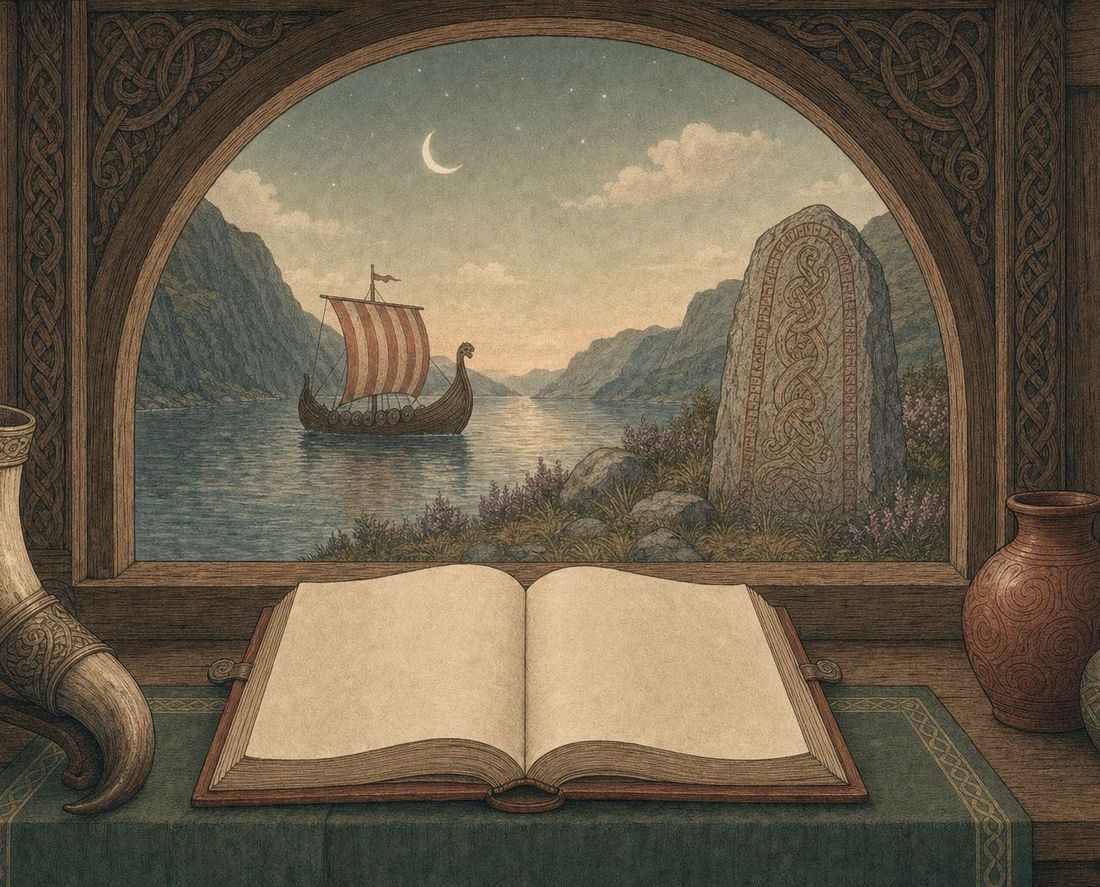
By the end of the course
The course ends inside real texts: Hávamál, Vǫluspá, three saga openings, and a runestone, in the original.
Try it — the first check of Lesson 1
Quick check
Sound it out: þing is said…
Old Norse, the language of the Eddas and the sagas
Old Norse is the North Germanic language of Viking-age Scandinavia and medieval Iceland, the language of Hávamál, Vǫluspá, Snorri's Edda, and the Icelandic sagas. This online course takes you from the alphabet to reading real passages of that literature in the original.
It is built for beginners: no prior Old Norse and no fluency in grammar terms required. Unit 1 starts with the alphabet, which adds six letters that English does not use (þ, ð, æ, ǫ, ø, œ), and with the Norse words already in your English: sky, egg, knife, window, they.
What the course covers
6 units · 18 lessons — progress saves in your browser.
Real texts, from the first unit
Every reading is a real, attributed passage, quoted exactly as standard editions print it — never invented app-sentences alone. By the final unit, the readings are the literature:
- Hávamál— “Deyr fé, deyja frændr” (stanzas 76–77) and the whole of stanza 47, “maðr er manns gaman”
- Vǫluspá— from pronouncing the opening lines aloud in Unit 1 to parsing the full first stanza in Unit 6
- The sagas— the opening lines of Njáls saga, Egils saga, and Hrafnkels saga
- Snorri's Edda— the first humans, Sleipnir's eight feet, and Freyr sick with love, from Gylfaginning
- The Jelling stone— King Gormr's runestone for Queen Þyrvé, read word by word from its transliteration
How the course works
The method is graded reading: short lessons that each teach one system, such as the article attached to the end of the noun, the case endings, or the strong and weak pasts, and then put it to work straight away in real, attributed text. Poems and sagas are quoted in the normalized spelling this course teaches; the one practice story, Þórr and his stolen hammer, is retold after Þrymskviða and labeled as such.
Every example word carries audio in a reconstructed pronunciation, every word in a reading can be tapped for its meaning and grammar, wrong answers explain why, and vocabulary returns for review on a spaced schedule. Every quoted passage was checked against published editions before publication.
Common questions
Which Old Norse does the course teach?+
Old Icelandic of about 1200, in the normalized spelling used by the standard grammars and student editions (E. V. Gordon, Michael Barnes, Anthony Faulkes). Almost all Old Norse literature, including both Eddas and the sagas, survives in Icelandic manuscripts, so this is the Old Norse you will meet on the page. Normalized spelling is a modern standard: the manuscripts spell inconsistently, and editions regularize them, some with ö in place of ǫ and ø. Runestones are different again, since they are carved in the regional Norse of their time and place, and the course introduces them separately in Unit 6.
Is Old Norse the same as Icelandic?+
Modern Icelandic descends from it and has changed remarkably little, so an Icelander can read the sagas with a little help. The pronunciation and some of the grammar have moved on, though: Old Norse maðr is modern maður, and the vowel written á has changed its sound. This course teaches the medieval language, spelled and pronounced as it was around 1200.
Did the Vikings write in runes or in this alphabet?+
In runes. In the Viking age Norse was written in the Younger Futhark, a sixteen-letter runic alphabet, mostly carved on stone, wood, and bone. The Latin alphabet arrived with Christianity, and the Eddas and sagas were written down in it in the 1200s and later. The course teaches the Latin-letter spelling of the editions, because that is how the literature survives, and reads a runestone in Unit 6.
How long does the course take?+
6 units of 3 lessons each, 18 lessons of about 5–10 minutes, plus spaced review. By the end you read real stanzas of Hávamál and Vǫluspá, saga openings, and a runestone with tap-glosses. Fluent unassisted reading of whole sagas takes months more; this course is built to get you started properly.
Do I need an account?+
Unit 1 is open to everyone with no account at all — progress is saved in your browser. From Unit 2, a free account keeps your lessons, streak, and review deck saved to you across devices.
What did Old Norse sound like?+
Every letter is pronounced. The accented vowels are long, stress always falls on the first syllable, þ and ð are the two sounds of English th, and hv is a breathed w. Every example word and reading line in the course has audio in a reconstructed pronunciation of Icelandic around 1200, so you hear each sound from the first lesson rather than guessing.
Do I need to know grammar terminology?+
No. Every term the course uses, such as case, gender, or nominative, is defined in plain words before it is used, and every word in every reading can be tapped for a full explanation.
Also from Polytranslator: Old Norse translator · Learn Old English · all courses